Amed Karangasem remains one of Bali’s most appealing destinations for travelers looking for a different side of the island. While the area is well known for snorkeling and diving, Amed offers much more, from stunning sea and mountain views to rice fields, trekking routes, temples, and authentic Balinese culture.
Located in East Bali, Amed continues to attract international visitors, particularly travelers from Europe and Australia. Domestic tourists from Java and other parts of Bali are also increasingly choosing Amed as a holiday destination.
With its combination of natural landscapes and cultural experiences, Amed Bali is gradually developing beyond traditional marine tourism.
Amed Offers Sea, Mountain and Rice Field Views
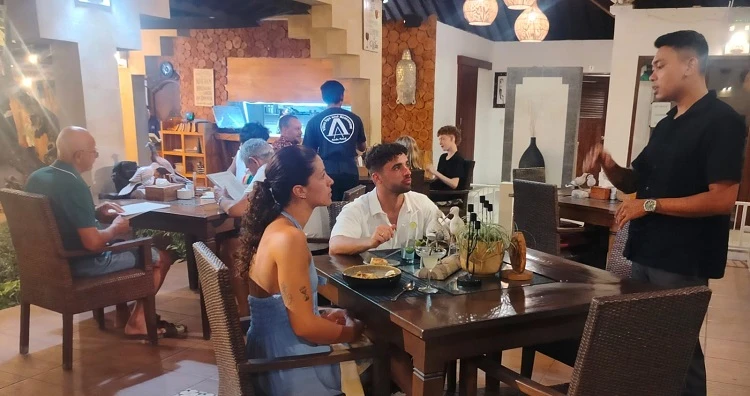
Anda Amed General Manager Ketut Susiadi said Amed has a unique tourism character because visitors can find several different attractions within the same area.
He made the statement during an interview in Bunutan Village, Abang District, Karangasem.
According to Susiadi, visitors do not come to Amed solely for marine activities. The area’s natural landscape allows travelers to combine beach and underwater experiences with outdoor and cultural activities.
“Amed has sea views, mountain views, and rice field views. Guests can enjoy more than the sea, including activities such as trekking and visiting temples,” he said.
This combination gives Amed East Bali a strong advantage for travelers who want to experience more than a typical beach holiday.
Visitors can spend time by the coast, explore the surrounding hills, walk through rice fields, go trekking, and discover local Balinese traditions and communities.
Snorkeling and Diving Remain Amed’s Main Attractions
Despite its growing range of activities, snorkeling and diving in Amed remain among the main reasons travelers visit the area.
Amed’s coastal waters provide opportunities to explore Bali’s underwater scenery, making the destination particularly attractive to travelers interested in marine tourism.
Snorkeling is also popular with families who want to introduce children to nature and marine life.
However, visitor interests are becoming broader. Travelers are increasingly looking for experiences rather than simply choosing accommodation based on facilities.
Ketut Susiadi said families currently make up a significant share of Amed’s visitors, with an estimated 60 percent families and 40 percent couples.
For many families, a trip to Amed is an opportunity to introduce children to Bali’s natural environment and local culture.
“For example, families take their children snorkeling to see the uniqueness and local wisdom of Amed. Their interest is more focused on the destinations and experiences available in Amed, rather than simply looking for villa facilities,” he explained.
A Growing Destination for Family Travel
The increasing number of family travelers presents an opportunity for Amed to develop more family-friendly tourism experiences.
Beyond snorkeling and diving, families can enjoy trekking, explore rice field landscapes, visit temples, and learn more about local communities.
This combination gives Amed an advantage over destinations that depend heavily on a single tourism activity.
Instead of spending an entire holiday at the beach, travelers can combine marine tourism with outdoor adventures and cultural experiences within the same area.
Tourists Still Tend to Stay for a Short Time
Despite its potential, length of stay in Amed remains relatively short.
Its considerable distance from I Gusti Ngurah Rai International Airport is one factor influencing travelers’ itineraries.
Visitors typically stay in Amed for around two days, while some spend only one night before continuing to another destination.
“Some visitors stay for only one day. For example, they travel from Amed to Padangbai, or stay in Amed after arriving from Padangbai before continuing to the airport,” Susiadi explained.
Amed is also frequently included in travel routes connecting Bali with Padangbai and the Gili Islands.
This pattern suggests that some travelers still view Amed as part of a wider Bali and Lombok itinerary rather than a destination where they spend an extended holiday.
Repeat Visitors Continue to Return to Amed
Even so, repeat visitors to Amed remain an important part of the tourism market.
Some travelers return because they enjoy the area’s natural atmosphere and experiences. However, many repeat bookings are still made through Online Travel Agents (OTAs).
Positive travel experiences could provide an opportunity for local tourism businesses to encourage more direct bookings and longer stays while strengthening Amed’s reputation as an experience-driven destination.
Amed Has Strong Potential as an East Bali Tourism Destination
With its combination of ocean scenery, mountains, rice fields, outdoor activities, and local culture, Amed Karangasem has strong potential to become an increasingly important destination in East Bali.
Tourism development in Amed does not have to focus exclusively on snorkeling and diving. Trekking, cultural experiences, temple visits, rice field exploration, and interactions with local communities can all become part of the destination’s tourism offering.
A wider range of experiences could also encourage visitors to stay longer in Amed.
If travelers have more reasons to explore the area beyond its coastline, Amed could strengthen its position as a destination that combines nature, adventure, marine tourism, and authentic Balinese culture.
Ultimately, Amed is more than a beach destination. Its diverse landscapes and cultural experiences make it an attractive choice for travelers looking to discover a quieter, more natural, and authentic side of Bali.